Our webinar with POPAI last week provided a fascinating look
at shopper psychology, behavioural science, and retail media’s growing role in
influencing purchase decisions. POPAI Director Nick Widdowson, along with
savi’s Vikki Godlington, shared key
insights into how brands can better engage shoppers, stand out in-store, and
drive sales.
Here are the 10 biggest takeaways:
1. You are not your shopper
Shoppers don’t engage with brands the way marketers expect
them to.
- 95%
of human behaviour is subconscious, and 98% of decisions are instinctive. - Marketers
focus on packaging, promotions, and store layouts, but shoppers often
operate on autopilot. - Successful
shopper marketing means understanding how shoppers think, not assuming
they care as much as you do.
2. Too much choice leads to no choice
The paradox of choice is real—when faced with too many
options, shoppers disengage.
- Typical
store fixtures with 166 SKUs and five types of promotions just create
decision fatigue instead of driving sales. - Shoppers
glance at in-store messaging for just a split second—clutter confuses, it
doesn’t convert. - Solution:
Use clear, bold messaging and a strong visual hierarchy (color, shape,
numbers) to cut through the noise.
3. The Right Call to Action Makes All the Difference
Not all CTAs are equally effective—word choice triggers
different psychological responses.
- Words
like “win,” “free,” and “now” activate the
brain’s reward mechanisms, making promotions more compelling. - Social
proof (e.g., “97% of experts recommend”) reassures shoppers they’re making
the right choice. - CTAs
should be concise, clear, and credible—no jargon or vague messaging.
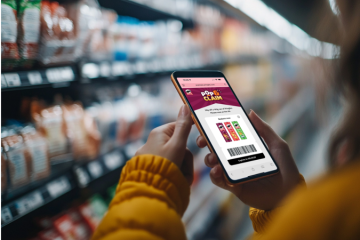
4. Coupons remove decision-making friction
A well-placed coupon can turn hesitation into action.
- Behavioural
science shows that shoppers are more likely to choose offers that
eliminate financial uncertainty (zero-risk bias). - Coupons
also tap into the bandwagon effect—when people see others taking advantage
of a deal, they’re more likely to do the same. - The
dopamine boost from a discount helps brands build positive emotional
engagement.
5. QR Codes Need to Be Visible to Work
It’s not enough to add a QR code—placement and clarity
matter.
- If a
QR code is buried in a corner, shoppers won’t see it. - AI
tools like heat maps can help predict whether a QR code is positioned in a
high-visibility area. - A
strong call to action is crucial—just placing a QR code without explaining
why it’s valuable won’t drive engagement.
6. Small changes = big impact
Tiny adjustments in shopper marketing can drive significant
results.
- Curved
shapes stand out more in a retail environment filled with straight aisles
and fixtures. - Even
facial expressions in advertising matter—a genuine smile can increase
sales threefold compared to a forced one. - Minor
tweaks in CTA wording, font contrast, and color can collectively boost
engagement.
7. Retail Media Now Spans the Entire Shopper Journey
Retail media isn’t just about in-store promotions anymore.
- Brands
can now engage shoppers before, during, and after purchase—from digital
ads at home to in-store displays and post-purchase follow-ups. - Retailers
are investing heavily in digital media networks, blending out-of-home ads,
mobile promotions, and in-store screens. - With
retail media spending surpassing TV advertising, brands must rethink how
they target shoppers in real time.
8. Consistency in Messaging Builds Trust
Shoppers need to see the same message across multiple
touchpoints to reinforce brand trust.
- Brands
like Cadbury excel by keeping their messaging clear and recognisable from
TV ads to in-store displays. - Digital
coupons should match in-store promotional messaging to avoid confusion and
strengthen recall. - A
best-in-class approach ensures messaging is insight-led and consistent
across channels.
9. Retail media networks offer precision targeting—but
need the right messaging
Retailers have access to rich shopper data, but success
depends on how brands use it.
- Insight-driven
messaging is key—brands must deliver the right message at the right time. - Budgets
should be allocated strategically to ensure campaigns have a measurable
impact. - Not
all retail media opportunities will work for every brand—choosing the
right placements is crucial.
10. Digital screens grab attention—but can also add to
clutter
Moving visuals naturally attract the eye, but too much
digital signage can overwhelm shoppers.
- The
brain’s fight-or-flight response makes us notice movement—this is why
digital screens are effective. - However,
too many screens can create in-store clutter, making it harder for
individual brands to stand out. - The
key is using digital signage strategically—content should be distinctive,
well-placed, and designed to contrast with its surroundings.
Final Thoughts
The future of shopper marketing lies in understanding
behavioural science, simplifying messaging, and adapting to the evolution of
retail media. It’s not about doing more—it’s about making every touchpoint
count.
I