Is promotional marketing finished for HFSS brands? “Absolutely not,” says the IPM
BOGOFs are gone. Paid social is off-limits. McCain and Iceland have already had complaints upheld. So is there anything left for food and drink brands to promote with?
“The answer that I’m happy to give you is absolutely not,” says Samuel Winterbourne, Regulatory Affairs Executive at the Institute of Promotional Marketing (IPM). “It just means that we need to be more thoughtful about the way we build campaigns.”
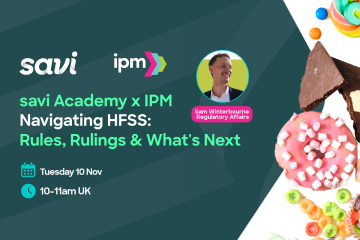
Sam joined more than 60 brand and agency marketers for our savi Academy webinar on 10 November. Here’s what we learned about what’s banned, what isn’t, and how to plan for 2027.
Start with the right question
Most marketers ask: “Is this campaign aimed at children?” Since 5 January, that’s the wrong question.
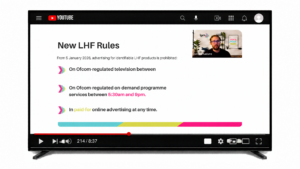
The less healthy food (LHF) ad restrictions apply whoever the audience is. Ads for identifiable LHF products are banned on TV and on-demand between 5:30am and 9pm, and in paid-for online advertising at any time. Campaigns that started before January aren’t exempt.
The better questions are: is this an identifiable LHF product, and is this a restricted channel?
That first question is harder than it sounds. HFSS (high fat, sugar and salt) is a score from the Government’s Nutrient Profiling Model. LHF is narrower: a product must be HFSS and fall into one of 13 categories, from soft drinks and savoury snacks to cakes, biscuits and ready meals. All LHF products are HFSS, but not all HFSS products are LHF. Sam has sat through working group debates on whether a roast potato on a Christmas dinner table counts as identifiable.
What the first ASA rulings tell us
The ASA has wasted no time.

- McCain ran a paid Facebook ad on 30 January that opened with chips frying. Upheld. The lesson: if it’s paid and the product is identifiable, it’s in scope.
- Iceland ran a Daily Mail banner showing four products. Three were out of scope, but one tub of sweets wasn’t, and that was enough. The lesson: one product can sink a whole ad.
- Burger King sent app users a BOGOF offer, which reached under-16s. Upheld. The lesson: owned media isn’t a free pass from the wider rules.
An upheld ASA ruling is effectively a formal warning, and the reputational damage is often the biggest cost. But it’s not the only one. Local authorities can issue improvement notices and £2,500 fixed penalties for in-store breaches, and repeated breaches can lead to prosecution.
What still works
 Here’s the good news.
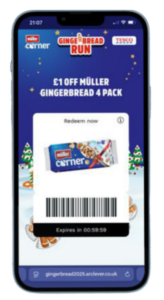
- Coupons and flat discounts. “50% off” or “save £1” on a single item is permitted in most cases. The rules target volume, so BOGOFs and 3-for-2s are out, but a single-purchase coupon or reward still works, in aisle, online and in loyalty apps.
- Brand advertising. You can advertise a brand without showing an LHF product. Think of a certain shade of purple. Brand values work too: causes, communities and sponsorships.
- Owned media. Your own social pages, apps, website and stores sit outside the paid-media rules. Boost a post, though, and it becomes paid.
- The right range. Coca-Cola’s in-store aisle fins and screens put Zero and Diet front and centre, in permitted locations, with the brand doing the rest.
- Smart prize promotions. Walkers’ crisp sandwich instant win used single-pack entry, adult themes, a cash prize and owned channels only.
- Smaller businesses. Food and drink businesses with fewer than 250 employees may be exempt from the ad restrictions.
Every exemption comes with conditions, so check before you rely on one. As Sam put it: “The best compliant campaign is not necessarily the campaign with the most restrictions. It’s the campaign that understands those restrictions and uses them intelligently.”
Your questions, answered
If an ad is flagged, is the retailer or the brand responsible? “The simple answer is that it’s both,” said Sam. Retailers are responsible for placement, and brands for the nutritional data and strategy. “Nine times out of ten, the ruling will go against the brand, because it’s their product.”
Can we gift products to influencers? Paid-for doesn’t just mean money. “If a brand or a person are receiving something of value in exchange for advertising your product, that is paid-for media.” A genuine no-strings gift may be fine, but any expectation to post brings it into scope.
Is a tobacco gantry in a small convenience store restricted? Not explicitly, but in most small stores it will sit at the checkout or within two metres of the entrance, and both are restricted.
Five things to remember
- Know whether your product is HFSS, LHF or neither
- Check the channel, audience and territory
- Assess the promotional mechanic as well as the creative
- Don’t rely on exemptions without checking the conditions
- Bring regulatory advice in early
Watch the full session
Watch the recording →
To book 15 minutes with Sam, email legal@theipm.org.uk. To find out more about the IPM, email info@theipm.org.uk.
Planning your 2027 promotions? Single-purchase coupons and rewards are one of the most flexible tools you have left. [Talk to the savi team →]
The Institute of Promotional Marketing is the UK’s only dedicated trade body for promotional marketing, representing brands, agencies and suppliers since 1933, and sits on the Committee of Advertising Practice. Thanks to Sam and Lucy Porter at the IPM for a brilliant session.