Every January, millions of us make the same promise: this year will be different.
We sign up to the gym, download the running app and fill the fridge with things we’ve been told are good for us. By February, plenty of those resolutions have quietly slipped. But something else tends to stick: the changes we make to what goes in the basket.
That makes January one of the most valuable moments in the shopper calendar. People are actively looking for new products, new routines and new reasons to switch. For brands, it’s a rare window where shoppers are open to trying something different, and the habits formed now can last well beyond the first few weeks of the year.
This year, though, the new year shopper looks a little different. Here are three things to plan for.
1. Health is going mainstream, and not just in January
The idea of a “health kick” that starts on 1 January and fizzles out by Valentine’s Day is starting to feel dated. Shoppers want to feel fitter, eat more protein and be more mindful about what they eat, and for many it’s become a year-round way of living rather than a short-term fix.
Weight loss jabs are speeding this shift up. According to Worldpanel by Numerator, 6.3% of GB households now have someone using a GLP-1 medication, up from 2.3% in 2024. That’s around 1.9 million adults, and in some cases those households are spending around £400 less on groceries.
It’s not just how much people buy that’s changing, it’s how they think about food. Over half (54%) of users say they have fewer cravings, 52% describe their eating as more mindful, and 40% want smaller portion sizes.
What does this mean for brands? It means the new year shopper isn’t just looking for a quick fix. They’re looking for products that fit how they want to eat now: higher protein, smaller portions, better-for-you swaps and treats that feel worth it. If your brand fits that picture, January is the moment to get in front of them and earn a place in their routine.
2. Budgets are stretched after Christmas
Health goals are only half the story. January is also the month when wallets are at their thinnest.
Our own research found that 28% of shoppers said offers or coupons would help fund their Christmas this year. That pressure doesn’t disappear when the decorations come down. Come January, many households are still recovering from the festive spend, and they’re thinking carefully about every purchase.
That creates a tension for brands. Shoppers want to try new things, but trying something new feels like a risk when money is tight. Will they like it? Is it worth the price over their usual choice?
A well-placed reward removes that risk. A coupon for a free or discounted first purchase gives shoppers permission to try something new without worrying about wasting money. And because digital rewards can be targeted, brands can reach the shoppers most likely to switch without cutting the price for everyone.
3. Shoppers want something back
January is noisy. Every brand with a remotely healthy product is talking about new starts, fresh goals and better choices. Standing out takes more than a message.
Our research found that 77% of shoppers are more likely to play a game or enter a prize draw if they know there’s a reward waiting at the end. That’s a powerful insight for the new year. Instead of asking shoppers to simply notice a health message, brands can invite them to take part: play a quick game, unlock a reward and head to the shelf to claim it.
The reward is what turns attention into action. It gives shoppers a reason to engage, a reason to remember the brand and a reason to buy.
What that looks like in practice:
MyProtein Perfect Match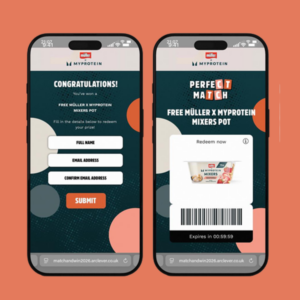
MyProtein’s Perfect Match game is a great example of how this works for health-focused shoppers.
The mechanic was simple: a quick matching game that gave shoppers something fun to do, with a reward worth claiming at the end. The results speak for themselves:
- 69,537 plays
- 63% of coupons redeemed
- 85% of redemptions made online
That last number matters. Health-focused shoppers don’t all shop in the same place, so the reward needed to work wherever they were buying. Perfect Match met them there.
Read the full Perfect Match case study
Plan the whole year, not just January
January is only the first moment. Easter follows, then a big summer of sport in 2027: the Ashes, Wimbledon and the Tour de France Grand Départ in Edinburgh, all within a few weeks. Then it’s back to school, Halloween and Christmas.
Each moment needs planning around four months ahead, so the thinking for summer starts soon after January. And when you plan the year as a whole, every campaign makes the next one smarter.
That’s how savi Smart Rewards works. Engage shoppers with games and instant wins, reward them with coupons, cashback or gifts, let them redeem across 85%+ of UK grocery, then evaluate what worked. What you learn in January shapes Easter. By Christmas, you’re not guessing.
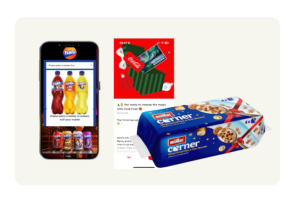
Some of our favourite seasonal campaigns from the past year:
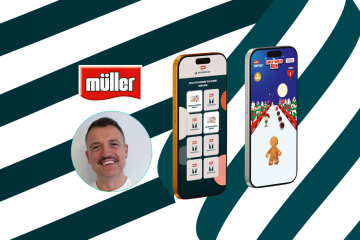
- Müller Gingerbread Run: a festive skill game with 602,786 plays, and shoppers spending an average of 1 minute 51 seconds in the game
- Coca-Cola Truck Tour: a free product coupon at the Christmas event of the year
- Fanta Haunted Factory: an in-app game for a Gen Z audience
There’s still time to plan for the new year
If January is on your list, the good news is there’s still time to get a campaign live, though the window is closing. Whether it’s a simple mobile coupon to drive trial or a full game with instant wins, savi Smart Rewards can be redeemed across 85%+ of UK grocery, in-store and online.
Want to talk through what a new year campaign could look like for your brand, or start mapping out your 2027 moments?
Get in touch with the savi team.
Sources: savi Shopper Report 2026, OnePoll survey of 2,000 UK grocery coupon users, Nov 2025. Worldpanel by Numerator, June 2026.