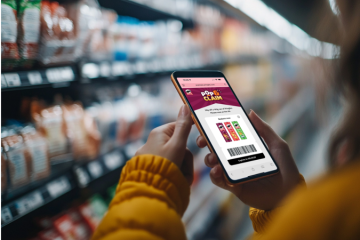

In this article, we look at how brands can use behavioural science—specifically the “Less Means More” trigger—to drive action with mobile coupons and digital rewards. From creating urgency to building FOMO, we explore how scarcity can turn limited-time offers into powerful tools for influencing shopper behaviour and delivering measurable results.
Why did 14 million fans rush online to buy Oasis reunion tickets?
Why does Starbucks’ Pumpkin Spice Latte spark memes and countdowns every year?
And why did people hunt down Coke bottles with their names on them?
The answer: scarcity.
When something’s in short supply-or feels like it might be-people value it more. It’s a powerful behavioural science principle called the scarcity effect, and it sits at the heart of the “Less Means More” Sales Trigger identified by marketing behaviour experts KHWS.
What’s behind the “Less Means More” trigger?
KHWS’s behavioural research, in partnership with Durham University Business School, shows that when shoppers perceive a product as limited, exclusive or fleeting, their motivation to act increases. The fear of missing out (FOMO) kicks in, and suddenly that item becomes more desirable-whether it’s a PSL or a concert ticket.
Brands that can create urgency without overwhelming the shopper tap into a shortcut in decision-making-and it works.
Big brands, small supply
Let’s take a look at how a few familiar names have used scarcity to influence behaviour:
- Oasis stoked mass hysteria with a one-line promise: “It will not be televised.” By removing access and keeping supply finite, they drove the biggest concert launch in UK history.
- H&M turned fast fashion into a frenzy with limited-edition collabs, like their first with Karl Lagerfeld. The collection sold out in hours, with resale prices doubling.
- Starbucks transformed a seasonal drink into a cult icon. The Pumpkin Spice Latte is only available for a few months a year-and fans know it. That short window creates repeat urgency and emotional connection.
- Coca-Cola’s “Share a Coke” campaign personalised mass-produced bottles and made finding your name feel like winning a prize. The difficulty in finding it only made it more special.
What does this mean for offers and mobile coupons?
Scarcity isn’t just for physical products. It works brilliantly in the digital rewards space too.
With mobile coupons, brands have the ability to:
- Control quantities or timeframes to create urgency (“Only 1,000 coupons available” or “Offer ends in 48 hours”)
- Personalise rewards, making them feel exclusive
- Target specific audiences, increasing relevance and response
- Track redemption, offering instant insight into shopper behaviour
Whether it’s a one-day-only cashback offer or a limited run of a try-me-free coupon, scarcity helps cut through the noise-and motivates action.
Make scarcity work for you
At savi, we work with leading FMCG brands to combine behavioural science with digital offer campaigns that influence real-world behaviour-from screen to shelf.
We’ve partnered with KHWS to explore how to apply the “Less Means More” trigger to digital rewards, so you can drive urgency, increase redemptions, and ultimately boost sales.
Want to learn how to apply this to your brand?
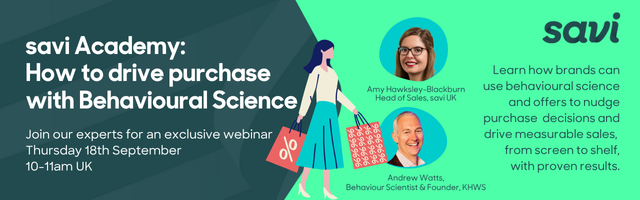
Join our free webinar on Thursday 18th September, 10–11am by Zoom, hosted by experts from KHWS and savi.
Save your place now.